
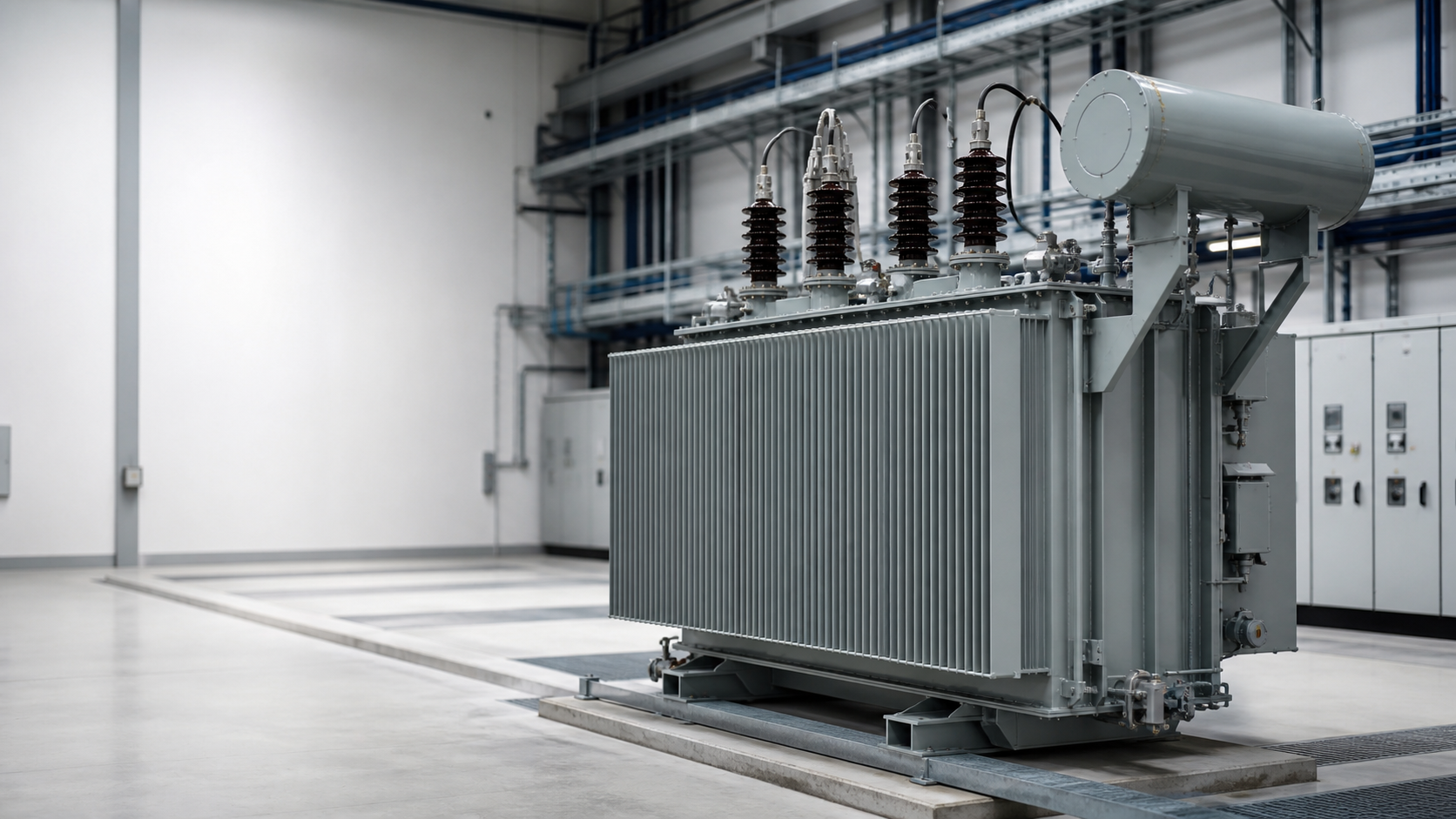
Reliable power, precisely matched to your project
Medium voltage transformers connect the distribution grid with industry, infrastructure, commercial buildings and renewable-energy systems. We configure dependable oil-immersed and dry-type solutions for new installations, modernisation and replacement and retrofit projectsDE.
Medium voltage transformers for dependable power distribution
A medium-voltage transformer converts the incoming grid voltage—typically 10 kV, 20 kV or 30 kV—to the low-voltage level required by the connected equipment, often 400/230 V. The exact configuration depends on the network, load profile, installation environment and applicable technical specifications.
Available medium voltage transformers include oil-immersed distribution transformers, cast-resin dry-type transformers, single-phase transformersDE and custom-engineered units; the complete range is set out in our medium-voltage power transformer overviewDE. Rated power, voltage ratio, vector group, impedance, tapping range, cooling method, enclosure and monitoring equipment can be matched to the project.
Transformer types
Hermetically sealed
Compact, protected oil insulation with reduced routine oil-related maintenance.
Conservator type
Proven liquid-filled technology with familiar service access for demanding duty.
Cast-resin dry-type
Clean indoor installation with solid insulation and no insulating-liquid leak risk.
Hermetically sealed oil-immersed transformers
In a hermetically sealed transformer, the insulating liquid is separated from the atmosphere. Flexible corrugated tank walls compensate for changes in liquid volume as the transformer heats and cools. Because air and moisture cannot enter the tank during normal operation, the insulation system is protected and routine oil-related maintenance can be reduced.
This compact design is a strong choice for outdoor substations, industrial plants, renewable-energy installations and locations with elevated humidity. Explore our oil-filled medium voltage transformersDE for further application details. Where a higher fire point and improved biodegradability are required, the same design can be supplied as an ester-filled transformerDE.
Conservator-type oil-immersed transformers
Conservator transformers use a separate expansion tank to accommodate changes in oil volume. Their open breathing system makes regular inspection and oil-condition monitoring important, but the design offers straightforward access for maintenance and has a long record in utility and industrial applications.
They are frequently selected for demanding duty, project-specific accessories and installations where serviceability is a priority. More complex network topologies can be covered by special designs such as three-winding transformersDE or earthing transformersDE for neutral-point treatment.
Cast-resin dry-type transformers
Dry-type transformers use solid insulation instead of liquid insulation. The encapsulated windings provide good resistance to moisture, dust and vibration, while eliminating the risk of an insulating-liquid leak. This makes cast-resin transformers particularly suitable for installation inside buildings or close to the electrical load.
Typical applications include data centres, hospitals, commercial buildings, rail infrastructure, factories, logistics facilities and other sites with strict fire-safety or environmental requirements. Cast-resin units are designed and tested to IEC 60076-11; see our cast-resin transformer solutionsDE for more technical information.
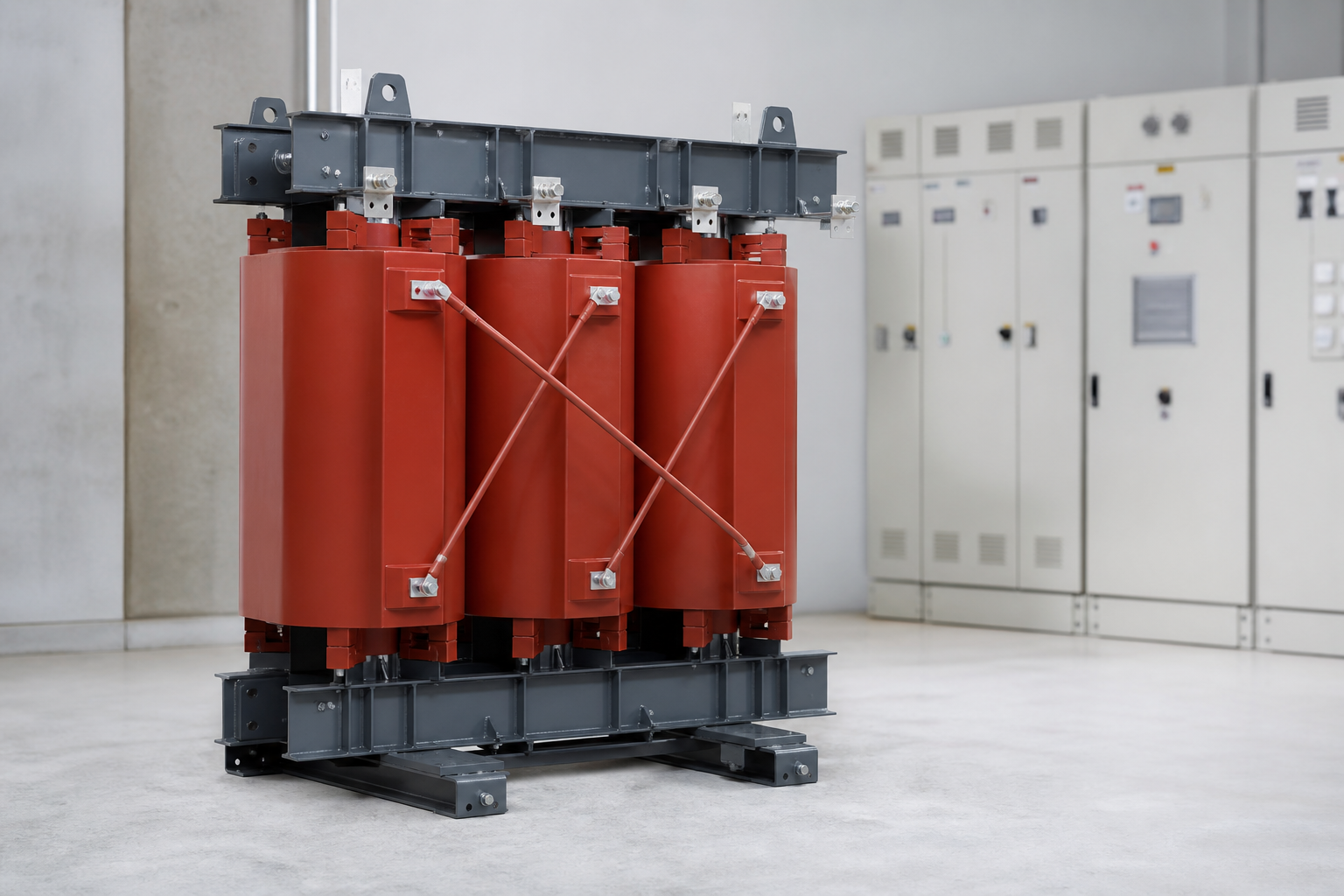
Medium voltage transformer specifications and typical ratings
Medium voltage transformers are configured around the grid, load and operating environment—not selected from power rating alone.
- Primary voltage: project-specific medium-voltage systems, commonly up to 36 kV
- Rated power: distribution and medium-power designs from standard ratings to several MVA
- Secondary voltage: commonly 400/230 VDE, 800 VDE for converter and storage applications, or another project-specific level
- Frequency: 50 Hz or 60 Hz, depending on the grid
- Vector groups: Dyn and YNyn configurations, including commonly used clock numbers such as 5 or 11
- Cooling: natural or forced cooling, including ONAN and ONAF for liquid-filled designs
- Voltage adjustment: off-circuit tap changer or another agreed regulation concept
- Installation: indoor or outdoor, with enclosure and protection class adapted to the site
Final ratings are defined from the grid data, required output, short-circuit conditions, ambient temperature, altitude, load cycles and local regulations. Medium voltage transformers can be engineered in line with the IEC 60076-1 standard and the wider IEC/EN 60076 series and project-specific utility requirements. Units placed on the EU market must additionally meet the loss limits of the EU ecodesign regulation for power transformers.
Where medium voltage transformers are used
- Industrial production and process plants
- Grid and local distribution substations
- Solar parksDE, wind farms and battery storage systemsDE
- Inverter transformersDE for PV, wind and storage converters
- Data centresDE and telecommunications facilities
- EV charging hubsDE and e-mobility infrastructure
- Hospitals, offices and commercial developments
- Rail, airport and transport infrastructure
- Water treatment, pumping stations and municipal services
- Construction sites and temporary power systems
How to select a medium voltage transformer
Selecting medium voltage transformers begins with a complete load and site assessment.
1. Define the electrical duty
Start with the primary and secondary voltage, rated power, frequency, vector group and impedance. The expected load profile also matters: continuous base load, frequent peaks, harmonics or future expansion can all influence the optimum design.
2. Assess the installation environment
Indoor or outdoor installation, available space, ventilation, ambient temperature, altitude, humidity, dust, vibration and fire-protection requirements determine whether an oil-filled or dry-type transformer is the better fit.
3. Compare lifetime costs, not only purchase price
Transformer losses continue throughout operation. Low no-load and load losses can therefore reduce energy costs and heat generation over the service life; where no-load losses dominate the duty cycle, an amorphous-core transformerDE is worth evaluating. Maintenance requirements, accessibility, monitoring and expected utilisation should be part of the economic comparison.
4. Specify protection and monitoring
Depending on the design, useful accessories can include temperature sensors, pressure-relief devices, oil-level indication, integrated protection relays, vibration dampers, wheels, cable boxes and remote monitoring contacts.
Oil immersed vs dry type transformer: which design fits?
For medium voltage transformers, the insulation and cooling concept should match the location, duty and risk profile.
Oil-immersed
Choose this design when efficient cooling, robust outdoor operation and an economical solution for higher loads are primary considerations. Hermetically sealed versions are compact and low-maintenance; conservator versions offer familiar service access.
Cast-resin dry-type
Choose this design for indoor or occupied buildings, when liquid containment is undesirable, or when fire safety, cleanliness and minimal maintenance are especially important.
No single design is universally best. The right answer depends on the network, building, operating profile and project risk assessment. Our detailed comparison of oil-immersed and cast-resin transformersDE sets the criteria out side by side.
Quality, testing and documentation
Reliable medium voltage transformers start with engineering discipline before delivery. Each project should have a clearly defined technical specification and documented routine tests. Depending on the project, additional type or special tests may be agreed. The handover package can include test reports, dimensional drawings, connection diagrams, operating instructions and technical data sheets.
Careful coordination of the transformer, medium-voltage switchgear, low-voltage distribution, protection concept and civil works reduces interface risks and supports smooth commissioning. For turnkey scopes the equipment can be supplied as a complete medium-voltage substationDE.
Request a quotation for medium voltage transformers
Share the essential project data and we will review your requirements for a technically and economically suitable solution. We supply transformers for projects across Europe. Selected ratings are available from stockDE when an urgent replacement transformerDE is needed.
Your details are used only to process this enquiry. Please see our privacy policyDE.
For a fast initial assessment of medium voltage transformers, include:
- Quantity and required delivery date
- Rated power in kVA or MVA
- Primary and secondary voltage
- Frequency and vector group
- Impedance and tapping range
- Indoor or outdoor installation
- Preferred oil-immersed or dry-type design
- Ambient conditions, altitude and required accessories
Frequently asked questions
What are medium voltage transformers?
Medium voltage transformers change voltage between a medium-voltage grid and the voltage required by a local distribution system or electrical load. A common example is converting 20 kV to 400/230 V.
Which standard applies to medium voltage transformers?
Power and distribution transformers are generally designed and tested according to the relevant parts of the IEC/EN 60076 series, supplemented by grid-operator rules, ecodesign requirements and project specifications.
How large should a transformer be?
The rating should cover the expected maximum demand with an appropriate reserve while avoiding inefficient oversizing. Starting currents, harmonic loads, load diversity, future expansion and allowable temperature rise should be included in the calculation.
Do hermetically sealed transformers require maintenance?
They are designed as closed systems and generally require less oil-related maintenance than conservator transformers. Regular visual inspection, connection checks, cleaning and electrical testing according to the operating plan are still recommended.
Can a medium-voltage transformer be customised?
Yes. Voltage ratio, power, vector group, losses, impedance, tap settings, cooling, enclosure, terminals, monitoring and mechanical layout can be adapted to the application within the limits of the selected design.
What if I need a transformer above 36 kV?
For high-voltage requirements above the medium-voltage range (up to 154 kV / 150 MVA), our sister company hochspannungstransformatoren.de engineers and supplies high-voltage power transformers for utilities, industry and large-scale infrastructure projects.